
Why do we Indians have so many festivals and why do we still need to celebrate each of them? Why is it necessary to continue these traditions? Don’t we often ask these questions every time a festival is at the doorstep and ignore a few of our traditions? But, do we care to find the reasons behind it? I am not talking about the tales we heard from our grandparents as kids or the tales our parents often tell us, but the actual science behind it.
I, being a Maharashtrian, will be sharing more about Marathi festivals, which are more or less similar to the festivals celebrated all over India, just that the terminology used is different according to the states and the languages they speak, and also about the delicacies that are specially prepared on these occasions. Since India’s occupation mainly is Agriculture, all our festivals represent the celebration of the occupation and its stages and also, most important, our Nature. Let’s begin with our Hindu New year!
- Gudhi Padwa (गुढी पाडवा)
- Vat Purnima (वटपौर्णिमा)
- Raksha Bandhan/ Narali Purnima (रक्षाबंधन/ नारळी पौर्णिमा)
- Ganesh Chaturthi (गणेश चतुर्थी)
- Navratri (नवरात्री)
- Dussehra (दसरा)
- Diwali (दिवाळी)
- Makar Sankranti (मकर संक्रान्ति)
- Mahashivratri (महाशिवरात्री)
- Holi (होळी)
Gudhi Padwa (गुढी पाडवा)
India has a huge Hindu population and our year starts from “Chaitra” month. Hindu calendar, being different from other calendars followed around the world, is based on the combination of position of the Sun and the Moon around Earth. And so, our New year starts somewhere in late march or the month of April. This day has different names according to the state you are in, like, Gudhi Padwa in Maharashtra, Vishu in Kerala, Puthandu in Tamil Nadu, Pana Sankranti or Odia Nababarsa in Odisha, Rongali Bihu in Assam, Poila Boishakh in Bengal so on and so forth.
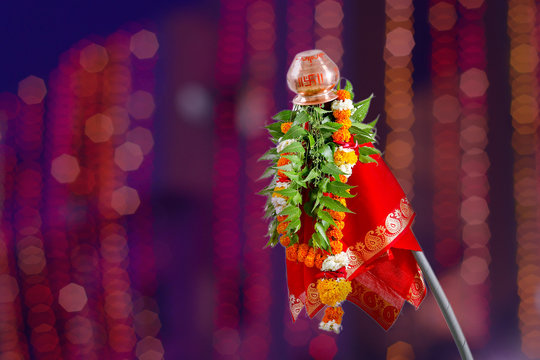
Gudhi (as shown in image) stands tall at the entrance of all the Marathi households. Gudhi contains a tall wooden stick whose top end is covered first with a traditional saree, Gathi (a chain of sugar candy), Neem leaves, garland and at the end, a kalash or urn ( A vessel used in rituals, especially a sacred water vessel) and Padwa means the 1st day. The scientific event of intersection of equator with meridians happens at the beginning of Chaitra month. Alongside, its not just a random tradition of hoisting Gudhi but, it has a meaning behind it.
The stick represents the strong foundation of the universe. We all believe that there is a power, which is responsible for the creation of universe and that is still unknown or is mysterious which translates to Gudha or गूढ in Marathi. The saree symbolises prosperity, the Gathi, prepared purely from sugar and water, represents energy, Neem, as we all know contains numerous medicinal properties like antiallergic, anti-inflammatory, anti-malarial, anti-fungal, antiviral, antioxidant, etc. in short, kills bacteria and keeps the air clean, the garland spreads fresh fragrance and represents nature. Last but very important kalash(urn), it is a metallic vessel, usually brass, which has a capacity to hold water, air and is a good conductor of energy. Combining all these together, Gudhi spreads positivity and gives people energy to avoid all the negativity, illness and obstacles and achieve prosperity. Who would not like to celebrate the 1st day of the year in such positivity?
The tradition starts by waking up early in the morning, cleaning the house, dressing up traditionally and then hoisting the Gudhi. There is one more tradition which has to be followed on this day which is a compulsory one and all the children hide out to avoid it. That tradition is, eating Neem tablets or mini balls. Now these tablets or mini balls are prepared purely by grinding neem leaves, some cumin, coriander seeds and a pinch of jaggery (which can sometimes be optional). Besides, the traditional food is prepared including a sweet dish which mostly is Shrikhand, a yogurt dessert.
Vat Purnima (वटपौर्णिमा)
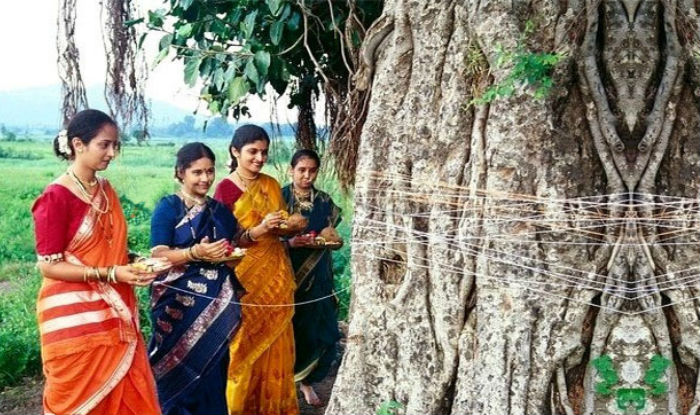
Vat Purnima is celebrated in India in the month of June by Indian women. Vat Purnima translates as Vat meaning the sacred Banyan tree and Purnima translating to Full moon. It is not because of the traditional story of a woman, who’s husband has died, pleads for his life from the god of Death by fasting and all, the famous Styavan and Savitri mythological tale. The tradition of this festival goes like this, married Indian women fast, gather around Banyan tree with a plate full of fruits, a few pulses, that are fresh in this season and make rounds around the tree for husband’s long life and to show loyalty for the husband. Most of the married Indian women, then and now, bound themselves in household chores and have limited access to clean and fresh air of the environment. Banyan tree is considered to be one of the sacred trees in India due to its many medicinal values. Banyan tree is said to have high moisture content, making its shade cooler than other trees. This tree, also emits the most oxygen than any other tree and has the capability to grow its own new tree from its branch and lives up to many years. This growing property of the tree represents eternal life. After the scorching summer heat, it is a good time to gather around this sacred tree for some refreshment, enjoying the many benefits of the tree. For the women, to get fresh and clean air and worshipping this great sacred tree was the main reason behind this festival.
Raksha Bandhan/ Narali Purnima (रक्षाबंधन/ नारळी पौर्णिमा)
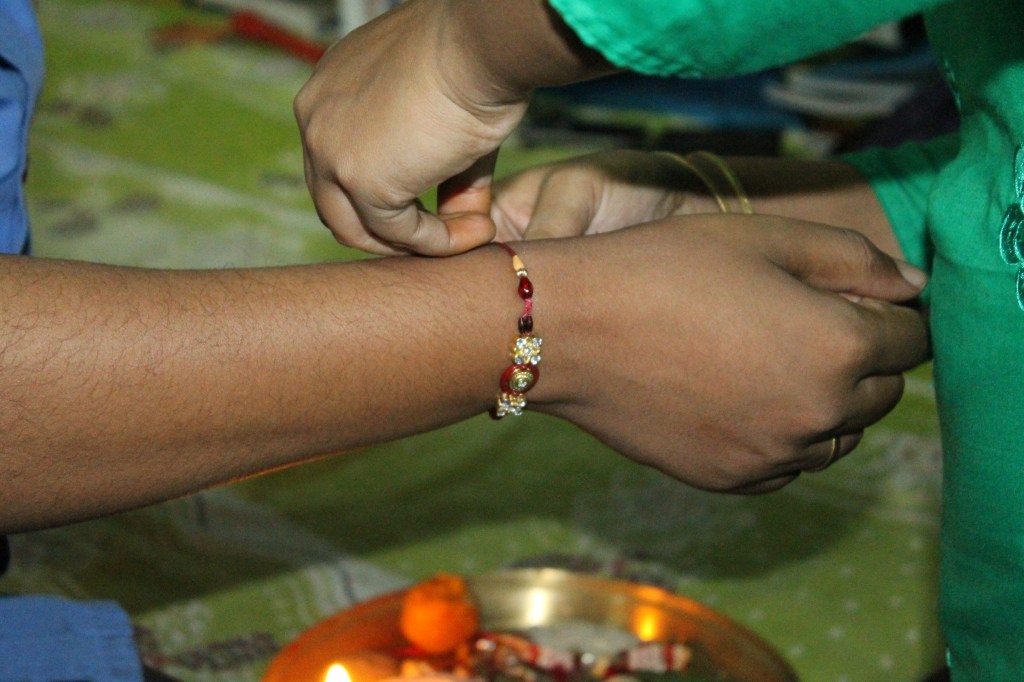
Raksha Bandhan is a festival of brother-sister bond. Raksha meaning protection and Bandhan meaning bond, that makes it “Bond of protection”. Raksha Bandhan falls in the month of August or the end of Hindu “Shravan” month on a full Moon day that is “Purnima”. Raksha Bandhan is celebrated all over the country. Brother is first seated on a traditional wooden stool, which is decorated with rangoli around it, the sister ties (usually) a red or orange colored silk thread around the brother’s wrist, applies tika on his forehead and waves aarti, later a piece of sweet is offered to the brother and the brother has to give some gift to his sister. Traditionally, it is a promise of protecting his sister in any situation.
Most diseases spread around this month of the year and since our hands are connected with various organs, tread is tied on right hand wrist which ensures a controlled flow of fluids. Tika is applied on the forehead which is a pressure point or the third eye point. Aarti comprises of a ghee lamp which is said to destroy negative energy.
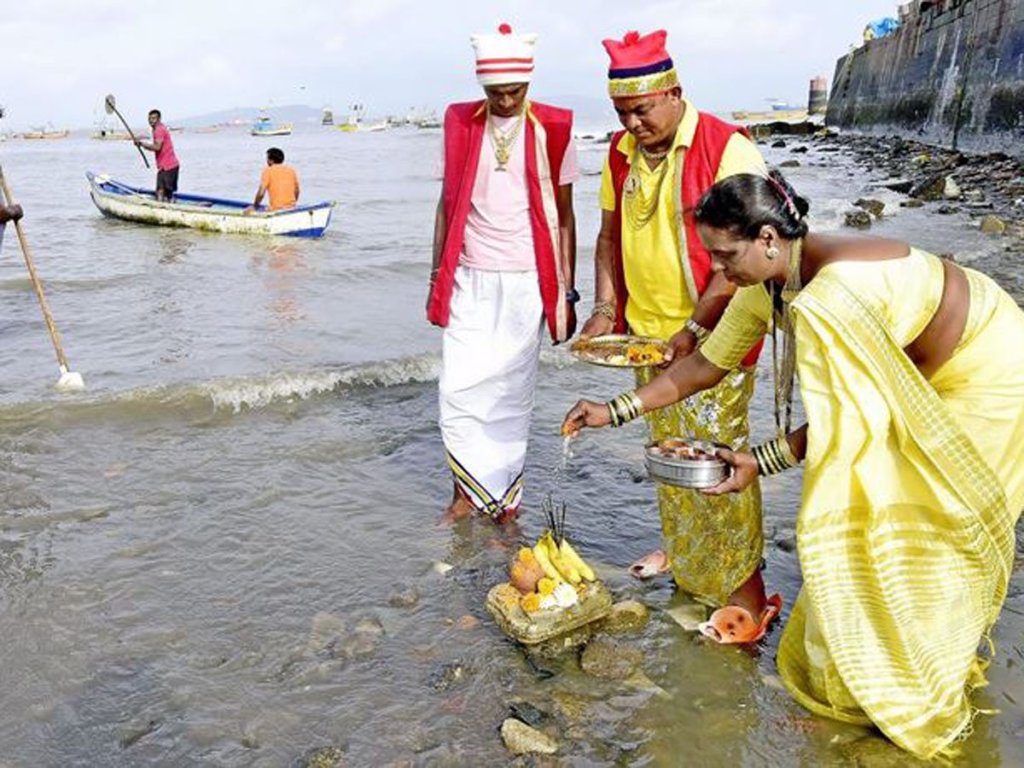
This day is also celebrated as “Narali Purnima” by the Fisher community of Maharashtra, also known as “Koli“. Due to rains and monsoons, being the breeding season of fishes, this community seizes fishing for a few months. They restart their occupation of fishery by worshipping the god of water or ocean (and also rains), Varun, to protect them from all the coastal accidents. Traditionally, a coconut is offered to the ocean to resume the fishing occupation. Narali Bhat, sweet coconut rice, besides other traditional food, is prepared for this festival, all over Maharashtra.
Ganesh Chaturthi (गणेश चतुर्थी)
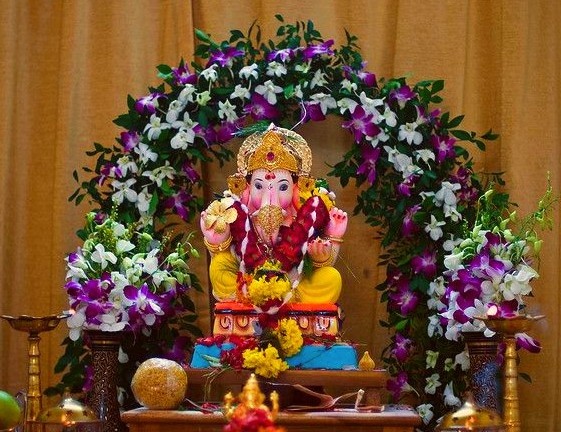
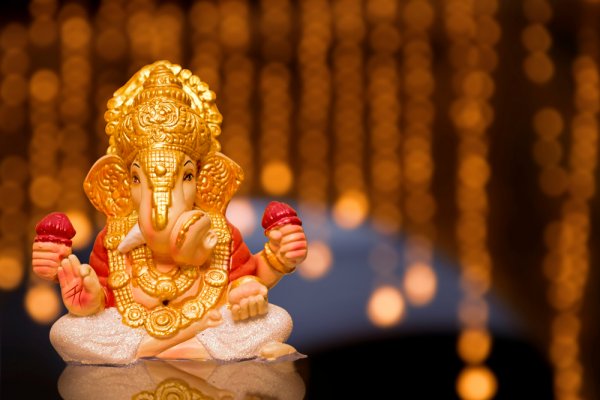
Ganesh, the elephant headed god, is the god of Knowledge and prosperity. Ganesh Chaturthi is celebrated on 4th day of “Bhadrapad” or “Bhadra” Hindu month that is end of August and the beginning of September. It is a 10 day festival, celebrated all over India with different traditions, all 10 days of worshipping the idol of Lord Ganesh. The preparations for Ganesh Chaturthi starts much before monsoon by the sculptors. The idol is traditionally sculpted using clay or soil and is painted with natural colors. The preparations at home begin a month prior to the festival. Houses are cleaned, decorated and made ready for the arrival of their beloved God. The idol is brought inside the house on the 1st day, and a puja is performed, when everyone wears traditional clothes. After the puja is over, the idol is placed at its place in a beautifully decorated wooden stool and background (as in picture).
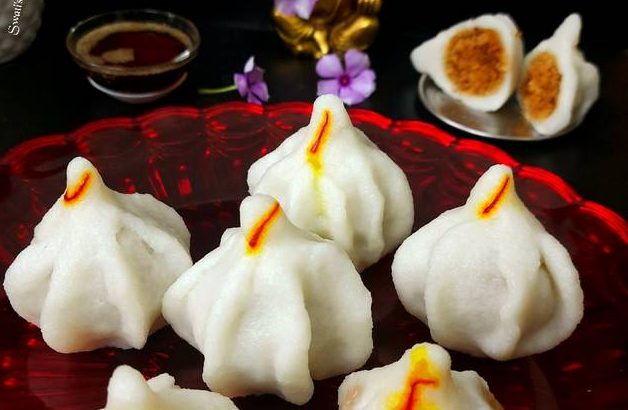
Modak is said to be Ganpati’s favorite food, hibiscus his favorite flower and durva or conch grass, his favorite herb. Modak is said to be a super food; this steamed sweet delicacy contains filling made from coconut, jaggery and cardamom where the outer layer is made from rice flour. This super food has all the bacteria killing properties and provides energy with many other nutrients. Hibiscus is easily available and grows almost the whole year and is used for many medicinal purposes like treating loss of appetite, cold, cures low blood pressure, treating hair loss, etc. Durva, a commonly available herb belonging to the grass family. Now this grass is also seen as a destroyer because of its aggressive nature, it comes under “Invasive species” category due to its crowding nature on other grass species and invading other habitats, which reminds us that we are to be destroyed some day. But, durva also has many medicinal values, it contains Vitamin c, palmitic acid, etc., cure ulcers, has antifungal properties and so much more! Hence, plucking out this species and offering to God saves our environment as well as helps us medicinally.
10 days the idol is worshipped by chanting bhajans and kirtans at least twice a day. The vibes are so positive around, everyone from the kids to the elders participate in these bhajans, all gather together for these 10 days. After bhajan and aarti, prasad is severed to everyone present. The kids are so excited to find out what special treat will they be getting as prasad today! After the 10 days, the idol is taken for visarjan, immersion of idol in water, at ocean or to a waterbody near the house. As the festival is at the end of August or in September, the soil in the rivers or ponds become porous, reducing the water levels which is maintained by immersing these clay made Ganesh idols.
Navratri (नवरात्री)


Navratri is translated as Nav that is 9 and Ratri meaning nights, it is a 9 days and nights festival celebrated all over India followed by Dussehra on 10th day. This festival is celebrated in September or October. It symbolizes the celebration of womanhood, the various phases and emotions of women, festival of Goddesses. Navratri is also a symbol of good over the evil due to the mythological tale which depicts Goddess Durga’s victory over the demon King Mahishasura. The traditional celebration is similar to Ganesh Chaturthi in some or the other way. Devi or Durga Mata idol is worshipped for 9 nights followed by the idol visarjan or immersion. September and October are the season when the climate changes and also, our body undergoes many changes; hence, many of us observe fasting by eating light food like fruits. Fasting detoxifies our body. Navratri is the time of year when the Sun is directly in line with Equator, also known as equinox, when the days and nights get same time of light and darkness. People wear colorful outfits for 9 days and perform Garba, dandiya before the Goddess at nights. Any form of exercise brings positivity in us and with our loved ones around, makes the whole environment positive, spreading happiness all around. The colorful sticks used for Dandiya dance represents the swords and the dance form represents “sword dance”. Everyone participates in these dance forms with equal enthusiasm.
Dussehra (दसरा)
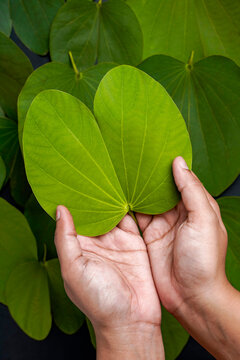
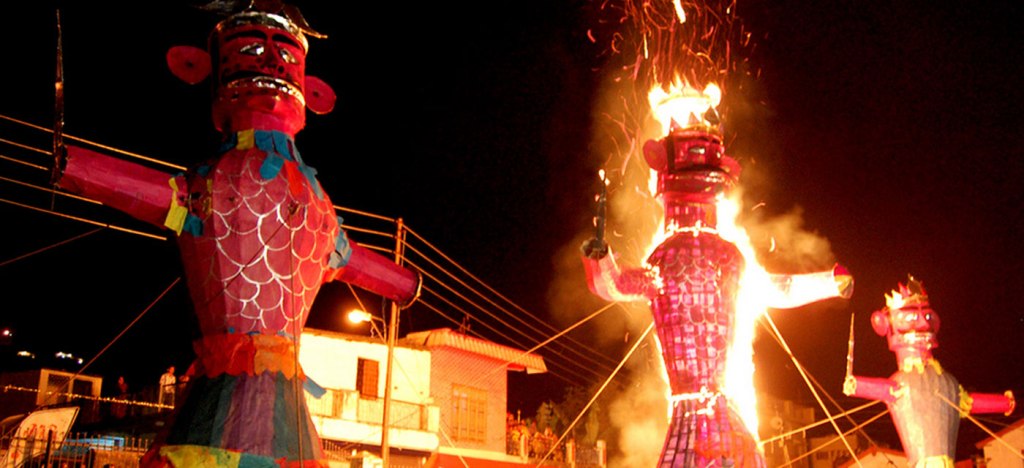
Dussehra or Vijayadashmi is the 10th day of Navratra. It is the day when Goddess Durga become victorious against the demon King Mahishasura. It is the same day when Lord Ram killed the evil 10 headed Ravan, who kidnapped Lord Ram’s wife, Sita and returned to Ayodhya victoriously. Dussehra is also translated as Dus meaning ten and hara meaning head, representing Lord Ram’s victory by destroying the 10 headed Ravan. This day, we worship all our tools, instruments, books, pens, pencils, vehicles which help earn us our bread and thank God for this. We visit and wish each other by exchanging Apta or Bauhinia racemosa leaf, which has many medicinal properties represents a prayer for healthy life and also, represents that we wish a wealthy life for each other. Gold is bought especially on this day, which also symbolizes that your household remains wealthy. A huge Ravan is built and is set fire by a person dressed as Lord Ram. Maharashtrians set foot outside the area and enter house after visiting a temple, this process is known as simolanghan, meaning a successful return from a foreign land. After entering the house, usually the elder male or a child is asked to cut the stomach of a figure made from raw rice on a plate and to dig out a gold ring, representing the victory of Lord Ram. Many different sweet delicacies are prepared on this occasion.
Diwali (दिवाळी)
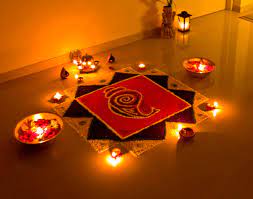
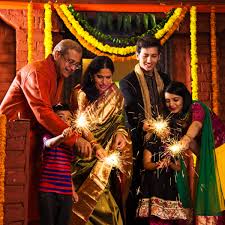
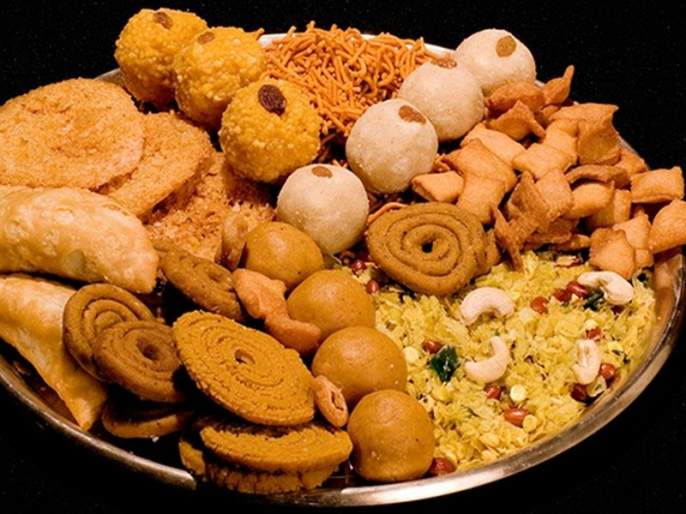
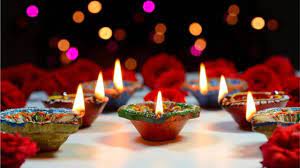
Diwali is another big festival of India, the festival of lights. Celebrated at the end of October or in the month of November and being the post harvest festival, the preparations start a month prior to the main festival. Diwali is a 5 day festival, each honoring the efforts contributed for the great harvest. People buy traditional outfits, the delicious smell of delicacies being prepared, lingers in the air, houses are cleaned. Special delicacies like Chakli, Besan Laddu, Rava Laddu, Karanji, Shev, Chiwda, Anarse, Chirote, Shankarpale, etc. are prepared and exchanged for Diwali. Everyone contributes in some way or the other for this huge festival. Every single being is worshiped in this festival. The 5 days celebrated are as follows:
1st day of Diwali starts with Vasu Baras, honoring and worshipping the cows and bulls who play a major role in traditional farming. 2nd day is Dhanteras when we worship and honor our wealth by worshipping Kuber, the God of wealth and also, Dhanvantari, the God of Health by maintaining hygiene and praising plants having medicinal importance. On Narak Chaturdashi, everyone has to wake up early, followed by abhyanga snan, the holy bath, that is, oil is applied over the body and later comes the ubtan, all this has to be done before the rise of Sun and this applies to all the members of the family. There is often a competition in the house for being the 1st, to be the earliest. Narak Chaturdashi is followed by Laxmi Puja, worshipping the Goddess of wealth, Laxmi. A puja is performed of an idol or frame of Goddess Laxmi, all the gold, silver, money, food, broom everything is kept for this puja, thanking the Goddess for all the wealth. Padwa is the day of fathers and husbands. All the fathers and husbands gets an aarti waved for them, the daughters and wives apply oil and ubtan on thier respective fathers and husbands. Similar to Padwa, Bhaiduj or Bhaubij is the day of brothers. After all the hardwork done by the females of the house by applying oil and ubtan, all the male have to offer a gift to the females of the house.
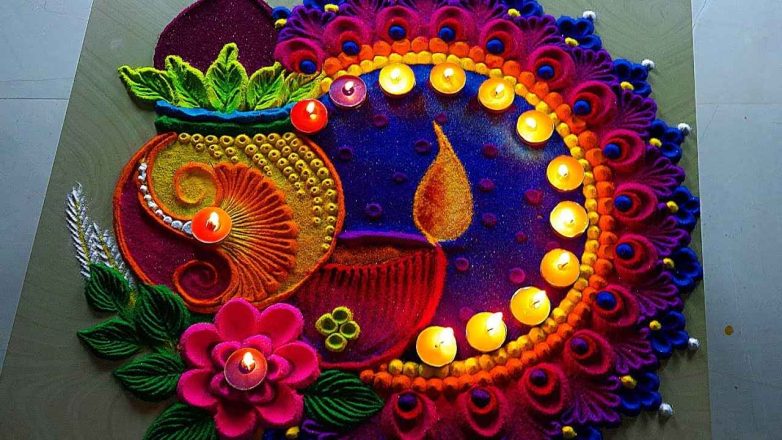
All the family members gather together for this festival, houses are decorated with lights. Diyas are kept all over the house as this festival falls on an amavasya or a new moon. Traditional diya is made from clay and is lit using oil, which keeps the mosquitoes, who breed in this season, away. As winter is cold, our body needs warmth and food increases the heat in our body and hence so many delicacies are prepared. Cleaning the house and lighting of 100s of diyas spreads energy in you, as the your electromagnetic flux is surrounded by the magnetic field from the diyas. The abyanga snan that is application of oil and ubtan cleanses and heals the skin and also controls ageing. This process also produces heat in our body that is required in this cold season. Diwali is a festival of spreading joy and positive energy.
Makar Sankranti (मकर संक्रान्ति)
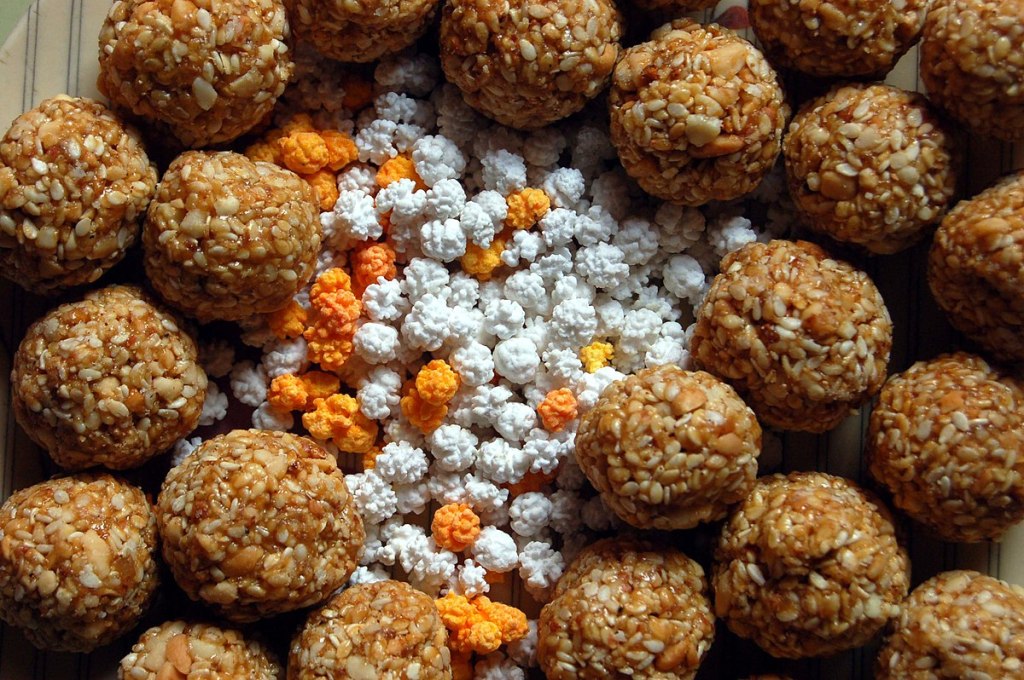
Makar Sankranti is a harvest festival, celebrated in the month of January. This same day is celebrated as Makar Sankranti in Maharashtra, Madhya Pradesh and Karnataka, Uttarayan in Gujarat, Pongal in Tamil Nadu, Lohri in Punjab and Haryana, Bihu in Assam and much more. Makar Sankranti literally translates to the transfer of sun in Makar or Capricorn zodiac and is celebrated in the month of January. Traditionally Til Gud laddus are prepared, that is a combination of sesame and jaggary, both provide heat to the body, a necessity as the weather is cold around this month. Both sesame and jaggary are high in proteins, rich in iron and vitamins and hence, have heat producing elements. Then why do we wear black on Sankranti? In Hindu tradition, black is considered as an inauspicious color and hence, is avoided during festival seasons. But January being a cold season, our body requires the maximum amount of heat, so, its a tradition to wear black for this particular festival. Bhogi is a delicacy prepared for this festival which is a mixture of 4-5 raw vegetables, spices, etc. which includes all the vegetables that have been harvested this season and remarks to bring prosperity.
Mahashivratri (महाशिवरात्री)
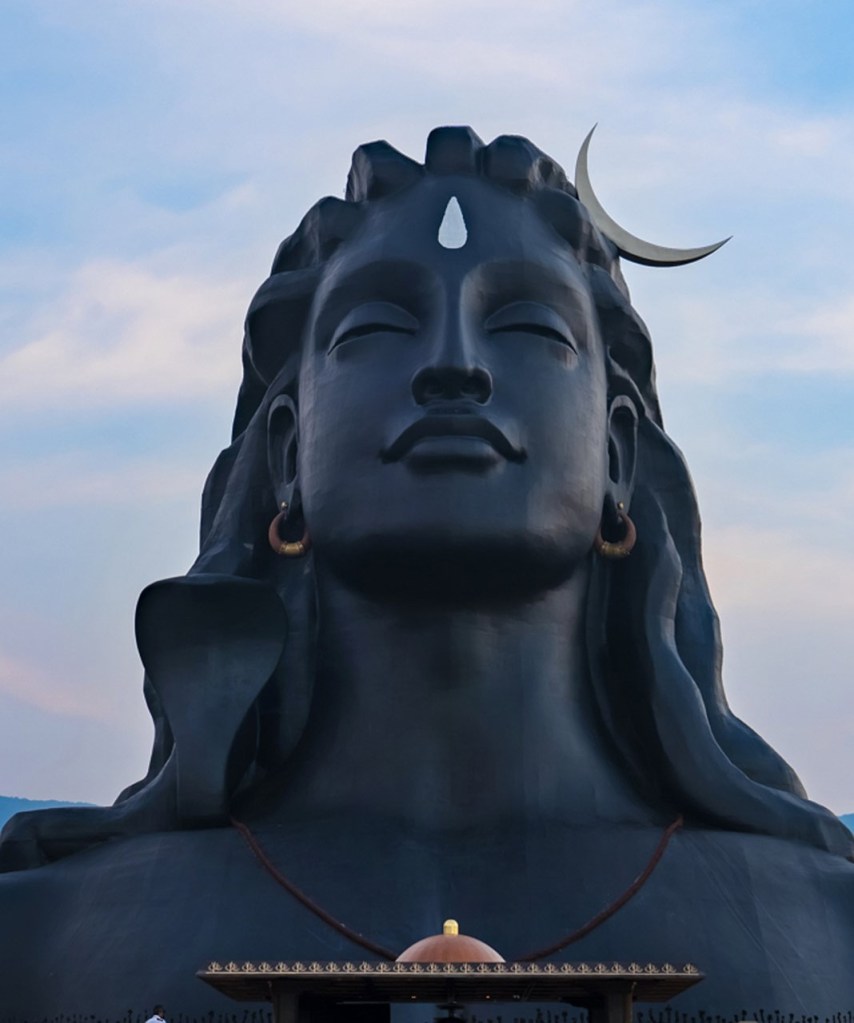
What is Mahashivratri? Why is it named after Shiv? Why do are people fast on this day? We have a Shivratri that is, a no moon day or a day before new moon, every month. Then why is this one Maha or grand? Generally Mahashivratri occurs either in February or March. It is “Maha” due to the position of our planet, Earth, the Sun and the Moon, on this day, is such that the gravitational pull is maximum, which results the flow of our body fluids in upward direction, towards brain, which happens only once a year. And to maximize the flow of body fluids in upward direction, one must be in an erect or vertical position, that is to not lie down or sleep. Many events are organized on this night like dancing, practicing meditation or yoga, singing, etc., to be awake all night. Now, the question still remains as why is this night named after Shiv? Shiv, is known as a god of destroyer, one must never forget, that we are to be destroyed one day, he is also a resemblance of overcoming the darkness or negativity. This night is to remind us all of this. Fasting is an integral part of of our traditions. Fasting is observed to detoxify our body. In other terms, to bring all the negativity out. So next Mahashivratri, don’t just enjoy a day off, but CELEBRATE it.
Holi (होळी)
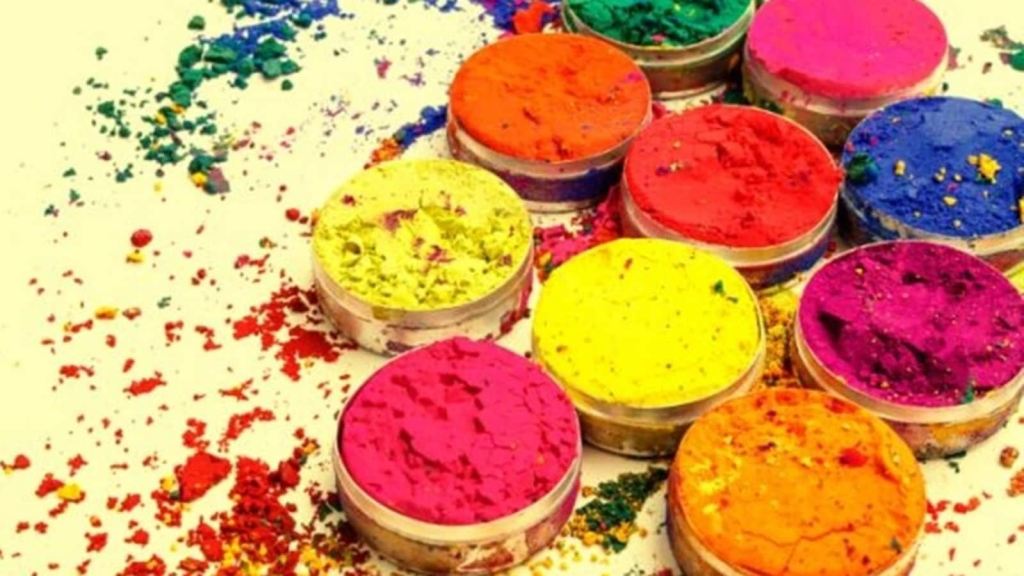
Holi, the festival of colors, is one of the favorite festivals of Indians. Holi is celebrated somewhere in the month of March every year. The 2 day festival is celebrated all over India with great enthusiasm. Holika dahan is performed a night before the “main event”. Its not just lighting the firewood and taking rounds around it. Traditionally the fire is to remove all the dried plants and branches for a new start and kill the bacteria from the atmosphere and stop its growth, that is induced by weather around this season. The colors that are played with, the next day are meant to be rubbed on the body. As mentioned earlier, the weather, this time of the year, induces the growth of bacteria in the atmosphere and our bodies. Unlike today, the colors were made with natural elements like Neem leaves, turmeric, etc. which have not only antibacterial but many other medicinal properties and help in cleansing our body. Next holi, try to take care of your skin by playing with natural colors and avoid the chemicals that pollute our body and atmosphere. Puran Poli, a combination of jaggery/ sugar (As preferred by region) and ground chickpea lentils with a hint of crushed cardamom (this mixture called puran) is stuffed in wheat flour and made into a flatbread or chapati (poli translates to roti or chapati). This Puran Poli is completed with slathering of desi ghee and is served with a thin lightly spiced dal called as Katachi Amti which is purely vegan. Next Holi if you get scrubbed by colors, “Bura na mano Holi Hai” and enjoy all the delicious food.
Similarly, planting Tulsi, or the holy Indian Basil, in front of our door is not just a tradition, Tulsi has many medicinal properties, it purifies the air, keep mosquitoes at bay, its seeds have cooling properties and much more. Many of our Indian customs and traditions have a scientific reason behind it. We are just a find away!
Let us come together and spread happiness by finding and spreading the reasons behind our beautiful festivals and celebrate in more enthusiasm.
 PiggyTrail
Well … , I guess we should add our elections as festivals as well…. 🌚🌚
LikeLiked by 1 person
Hahaha, maybe next time
LikeLike